
Georgian Parliament Speaker: parties that comply with Constitution fully protected by it
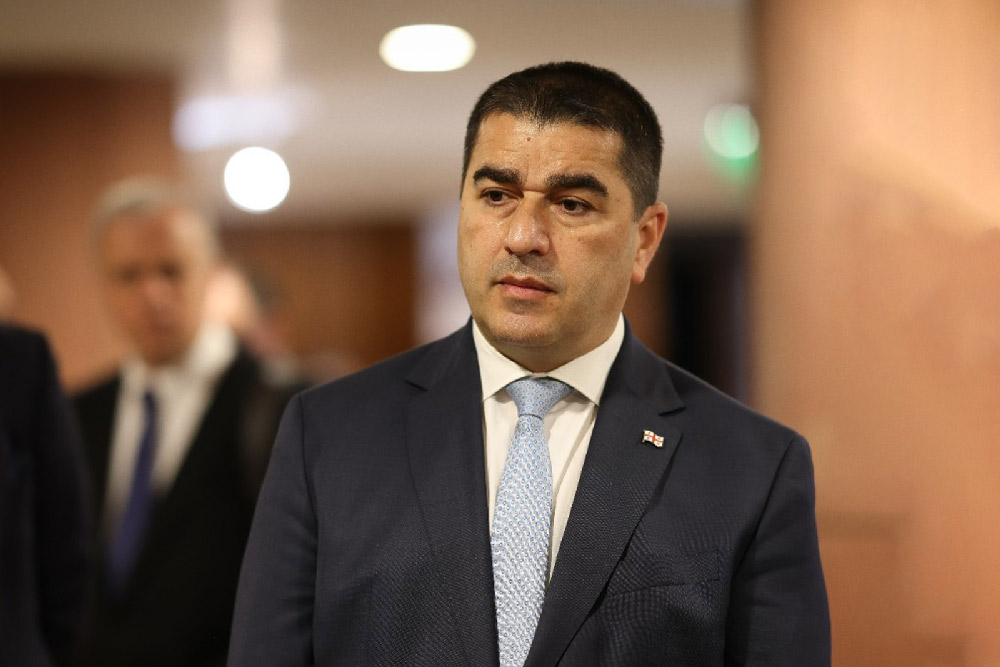
Georgian Parliament Speaker Shalva Papuashvili said on Saturday that any political party that did not violate the Constitution was fully protected by it.
Papuashvili was responding to a question from a representative of the Free Georgia party, who asked what guarantees other parties had that they, too, would not be labelled as part of the collective United National Movement.
In an interview with Imedi TV, Papuashvili noted that the principle of defensive democracy meant the state was obliged to prevent parties that violated the Constitution from remaining part of the country’s political landscape.
“Your guarantee, first and foremost, is the Constitution of Georgia. That is precisely why this process is taking place before the Constitutional Court. A party that does not violate the Constitution is fully protected by it. As for a party that does violate the Constitution, the very principle of defensive democracy dictates that the state is obliged to prevent such an entity from remaining part of the political landscape. Thus, your protection lies in the Constitution of Georgia, which fully guarantees the freedom of operation of any political association that acts in accordance with the Constitution and does not contravene its fundamental provisions or the principles of the constitutional order”, the Speaker said.
“I do not recall the exact number of registered parties. The number of registered parties and the number of active ones differ slightly, but, if I am not mistaken, around 300 parties are registered in Georgia. If we think about it, each of us could probably name at least 50 parties that we know exist and are, to some extent, active. Today, the discussion concerns only five parties against which we have filed a complaint with the Constitutional Court. Therefore, do not use this to diminish your own party. On the contrary, this actually presents an opportunity. When parties that incite violence, undermine democracy, reject democratic principles, and refuse to recognise even the institution of elections are no longer competing against you, you will have a greater opportunity to reach out to your voters”, he concluded.